

Tree risk assessments
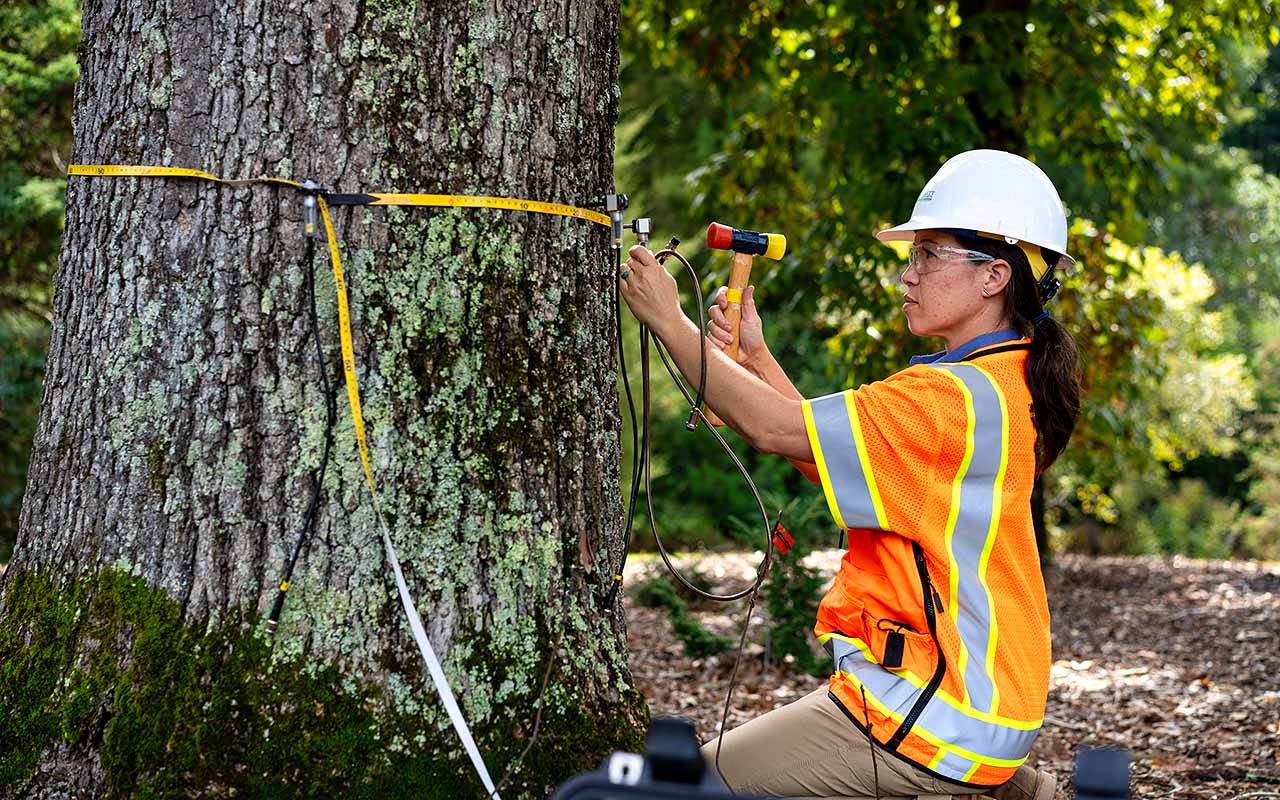

Identifying and mitigating tree risks for safer environments
Tree risk assessments are performed to identify, analyze, and evaluate the risk associated with your trees. Tree risk assessments can be performed on a single tree, several trees, on a large population of trees, and/or in combination with a tree inventory and management plan. Consulting Arborists who are ISA Certified and Tree Risk Assessment Qualified conduct these assessments.
Level 1 limited visual assessments can provide managers with a cost-effective way to help them begin to understand the risk their trees pose. This level of assessment is typically used to quickly assess large areas and tree populations (e.g., campuses, municipalities, property borders, etc.) to prioritize higher-risk trees.
When managers or tree owners need more information on the risk their tree(s) poses, a Level 2 basic assessment is the next step. This assessment is a detailed visual inspection of a tree and its surrounding site, and a synthesis of the information collected. It requires a 360° ground-based inspection of the visible buttress roots, trunk, branches, crown, and surrounding area.
A Level 3 advanced assessment provides detailed information about specific tree parts, defects, targets, or site conditions. It is usually conducted in conjunction with or following a Level 2 assessment. Specialized equipment, data collection and analysis, and/or expertise are usually required for Level 3 assessments. Sonic tomography and resistance drilling are common tools used to provide detailed information.