Pruning

Pruning, or tree trimming, is a practice that is periodically required on all woody landscape plants on your property. Bartlett arborists can help you with mature pruning, young pruning, or specialty pruning.
or call203-327-9378
Left Illustration

Tree trimming and shrub pruning

Pruning is a practice that is periodically required on all woody landscape plants. Fruit trees, shrubs, young trees, or mature trees, Bartlett Tree Experts can provide all of your pruning needs. Click on a tab below for more information on each aspect of pruning.
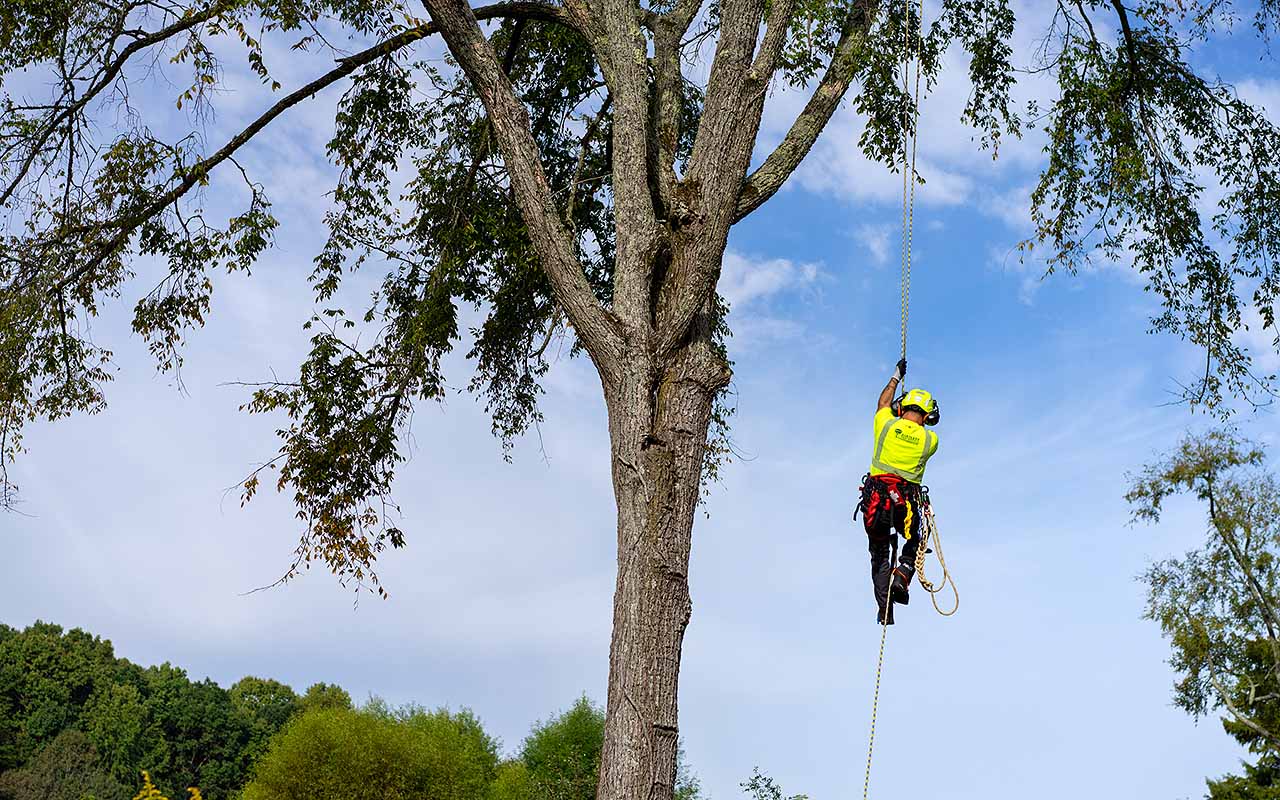
On mature trees, proper pruning is required to remove dead and dying branches to maintain plant health and safety. This is referred to as cleaning. Research has now documented that thinning, the removal of live branches to reduce density, reduces wind resistance and subsequent storm damage.

Thinning should only be done on trees where the crown is "too dense." A Bartlett arborist has the training and experience to evaluate this attribute. Thinning should be concentrated on the outer portions of the canopy, leaving as many branches on the interior crown as possible.

In some instances, the crown or single branches require reduction in length. This improves the form and shape of the plant, eliminates interference with objects and structures, and compensates for structural weaknesses.

Lower branches may require pruning for similar reasons. This process, known as raising, can be used to increase the amount of light beneath the crown of a tree.

Bartlett arborists are trained to evaluate the condition of your trees. They can determine the types of trimming service required to balance your goals and those of managing plant health and safety.

The time to prune might be earlier than you think. One type of pruning that is most frequently overlooked by consumers is structural pruning of young trees.

Trees evolved in forests where they tend to grow straight and lose lower branches due to competition for light. When planted in full sun in the landscape, many species tend to develop multiple stems or leaders. These are more prone to failure.

Lower branches tend to grow at the same rate as the terminal leader. This side branching results in weak attachments that are also likely to fail later in the life of the plant. So care for trees when they are young and growing quickly is critical to ensuring a strong framework for future growth. This practice uses pruning cuts to maintain a dominant stem as a point of origin unless multiple stem "clumps" are desired.

Branches are pruned so their size remains proportional to the stem diameter at their point of attachment. As growth continues, some tree branches are removed to ensure adequate spacing between permanent scaffold limbs. The shape of the tree is maintained to provide a natural open grown form typical of the species.

Bartlett arborists can also develop and maintain formal styles including pollarding, espalier, pleaching, and topiary. Fruit tree pruning techniques are becoming increasingly popular as more consumers grow fruit bearing plants in their gardens. Vista pruning is judicious removal of branches to enhance a specific view. This is frequently performed for consumers with homes near mountains or the shore.

Shrub pruning

Shrub pruning

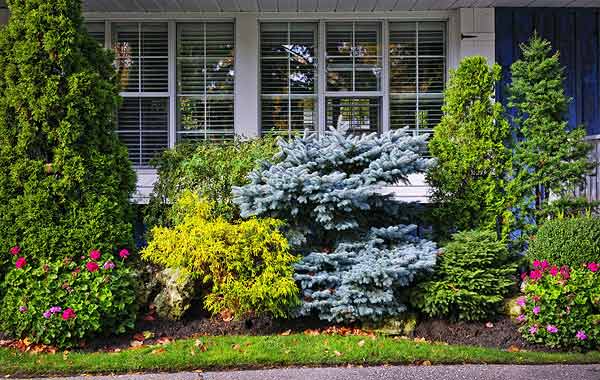
People are often surprised to learn that Bartlett specializes in pruning shrubs. But if we can routinely prune 75-foot trees, the Rhododendron in your foundation planting is easy in comparison.

Homeowners and landscape professionals often confuse shearing and pruning: they are very different concepts that produce very different results.

Shearing removes a portion of new growth each time it is performed. It produces an artificial shape rather than the natural form of the plant. Shearing produces a formal appearance with a dense outer shell of foliage with little growth on interior portions of the crown. Because only a portion of the new growth is removed, the plant continues to grow larger each year. Over time, it can out-grow its space.

Pruning removes older growth as well as new shoots. Because cuts are made deeper into the crown, the plant has a "looser" informal and natural appearance that can be maintained according to the plant species or variety. Because pruning removes some older branches, a specific size can be maintained for the space allotted for them.

Shearing is appropriate for formal gardens and for hedges. However, for individual plants, pruning is the better technique to sustain plant health and appearance over time.

birdsun

Bartlett Tree Experts offers scientifically based tree services. Get in touch:

or call Stamford, CT office at
Change office

Related FAQs

The best time to prune Leyland Cypress is after new growth emerges in the spring until roughly a month prior to the first hard frost. The way our seasons have been changing these past several years, we’ve been able to prune up until late October. If you have any other concerns, contact a Bartlett professional by clicking here.
The best time to prune is when all the fruit is finished and the leaves are starting to fall. At the same time as pruning, it is a good idea to have us carry out a winter wash. If you would like us to have a look, please contact us for an inspection.
This is the ideal time of year to prune cherry trees, however the dry conditions will induce stress so good irrigation is important before and after pruning works. Removing a third is however excessive and will result in dense, vigorous regrowth which will ultimately exacerbate the original issue and look unsightly. I would suggest a much smaller reduction. Please make an appointment for a consultation with one our professionals.
Palm trees require annual pruning to clean out the seed pods and any dead fronds. We are available to provide a complimentary inspection and provide a proposal. Please make an appointment if you are interested.
I would recommend pruning them to thin the canopies approximately 15% by removing live, rubbing, and interfering branches, as well as dead branches 1" and larger. This will help to facilitate better airflow through the canopies, which helps to decrease disease prevalence. I would also recommend pruning to reduce some of the weight on the large, over-extended branches to help reduce to risk of potential branch failure, which Bradfords are notorious for.