

Hemlock Woolly Adelgid
Adelges tsugae
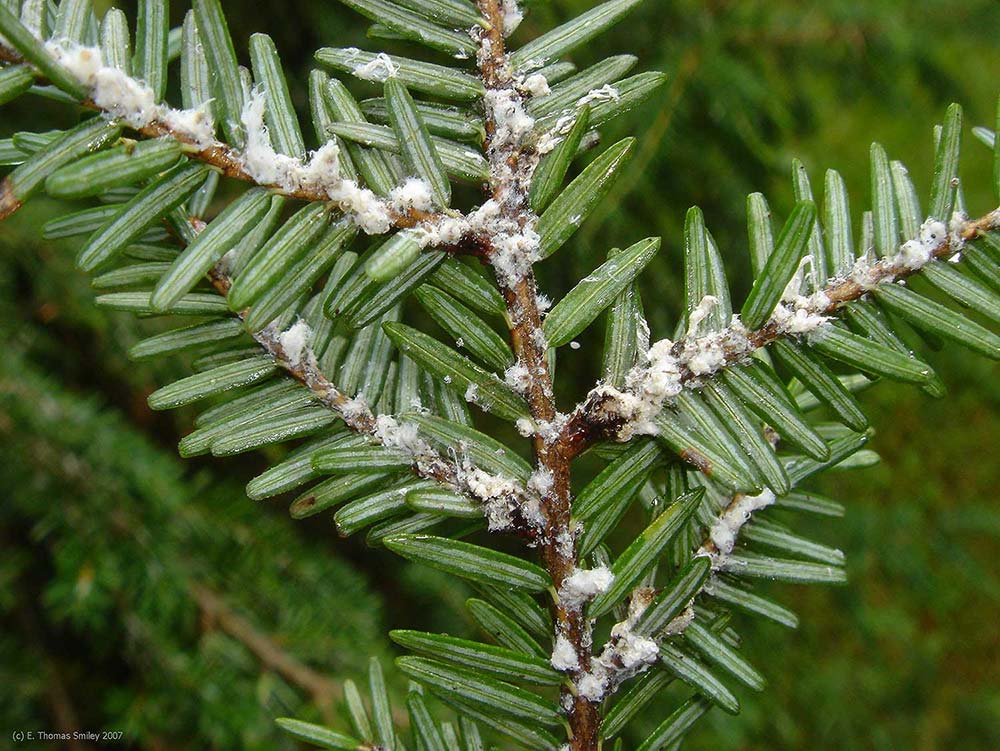
Tiny "cotton balls" on the underside of hemlock branches signal infestation by hemlock woolly adelgid.
The hemlock woolly adelgid (HWA) is a serious pest of both eastern hemlock (Tsuga canadensis) and Carolina hemlock (T. caroliniana). Heavy infestation by these insects can lead to tree death in just a few years. Although HWA is too small to be seen with the naked eye, infestation is quite obvious due to the white, woolly covering of the egg sacs, which look like tiny cotton balls lining the underside of branches at the base of the needles. The damage to infested trees is characterized by off color needles, needle drop, and eventual twig and branch dieback.
Lifecycle
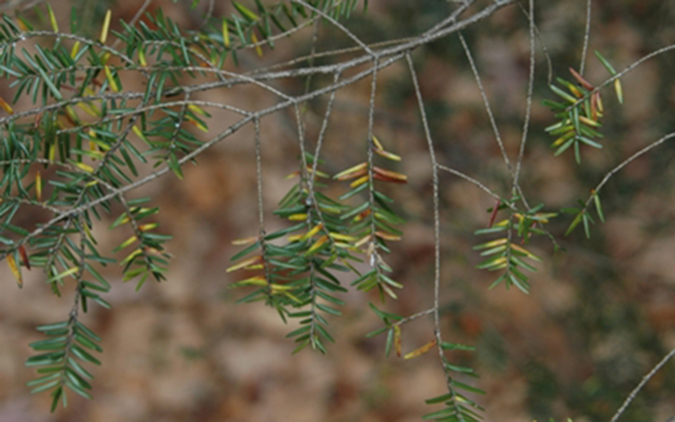
Thinning branches with yellowing needles is often a sign of hemlock woolly adelgid.
Populations of this adelgid are all female and reproduce asexually. Crawlers emerge in the spring and can move to other parts of the tree, or can be moved to new trees by wind, birds, and mammals. Once these crawlers settle on a feeding site, they become immobile feeding nymphs. When they reach adulthood, each hemlock woolly adelgid can lay up to 300 eggs and start a new generation.
Symptoms
The first sign of hemlock woolly adelgid damage is usually fading, thinning, and dying branches near the base of the hemlock tree. The insects typically begin their infestation in the lower branches and can easily be identified by the cottony masses attached at the needle base.
Control
Without treatment, hemlock trees will continue to lose vitality. There are several options available for controlling hemlock woolly adelgid, including application of horticultural oils and soaps. If hemlocks are monitored and treated as necessary, the health and beauty of the tree can be maintained.