

Oak Processionary Moth
Thaumetopoea processionea
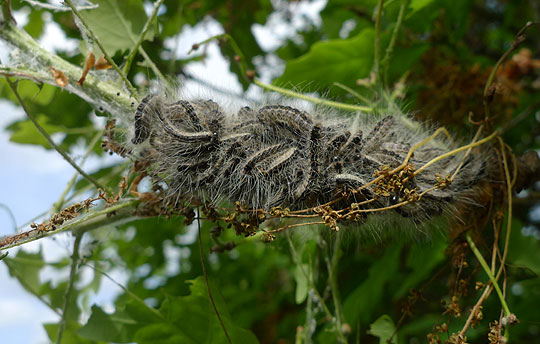
Larvae massing on a tree branch.
Oak processionary moth (Thaumetopoea processionea), also known as OPM, is a defoliating pest of many oak species including English, Sessile, and Turkey oaks (Quercus robur, Q.petraea, and Q.cerris). The characteristically hairy caterpillars also feed on the foliage of hornbeam, hazel, beech, sweet chestnut, and birch.
If you think you have oak processionary moth (OPM) on your property, please make an appointment online or call us at 0845 600 9000 for an inspection of your trees. We have over 10 years of experience assisting clients in controlling outbreaks on their oaks and are the leading tree company in the UK specialising in management of this pest. Do not remove the caterpillars or nests yourself. They should be removed by an Arborist who has had the correct training, has the necessary equipment and knows how to properly dispose of nests to prevent the pest from spreading.
To help track outbreaks, it is important to report OPM sightings to the Forestry Commission via TreeAlert or by email to opm@forestrycommission.gov.uk.
Affected Areas
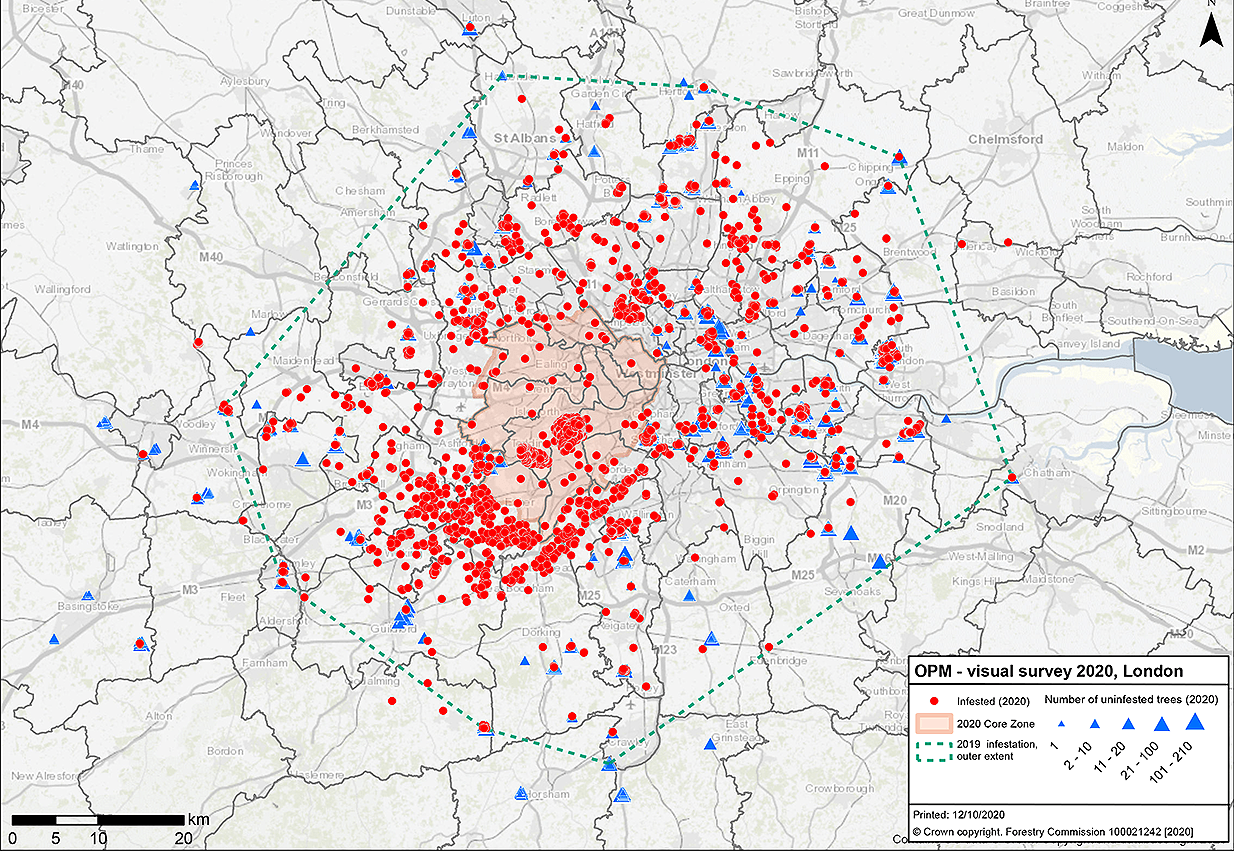
OPM is now established throughout much of greater London and some surrounding areas as well.
Oak processionary moth has been spreading rapidly and is now established throughout much of greater London and some surrounding areas as well.
Visit the Forestry Commission for more information on the spread of OPM.
Lifecycle
Eggs
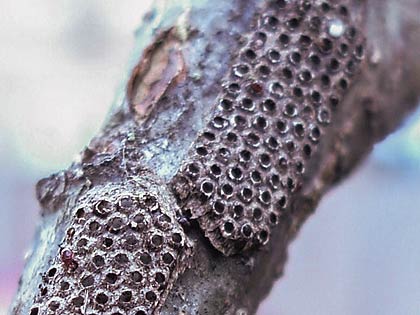
Oak processionary moth eggs.
Eggs are laid from July to early September. Each female lays between 100 and 200 eggs on twigs and small branches in the canopy.
Larvae/Caterpillars
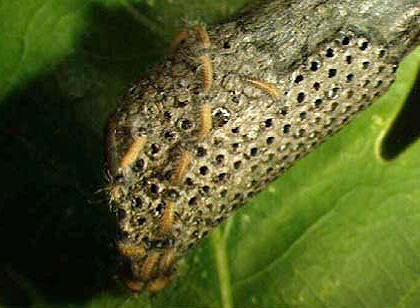
Oak processionary moth larvae.
Oak processionary caterpillars can be found from April to June. There are six stages during the caterpillar feeding cycle with caterpillars getting progressively bigger during each stage.
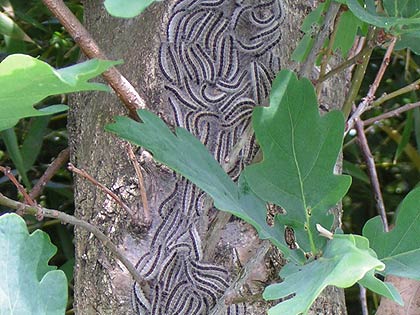
Oak processionary moth caterpillars.
Stages 1-3: Caterpillars are very small when they hatch, around 2mm long, and are still less than 1cm by the time they reach the third stage.
Stages 4-6: Caterpillars spin silken nests and the larvae eventually moult to the pupal stage within those nests. During this phase, larvae may also be seen massing on the trunks and branches of trees and moving in the characteristic processions that give the moth its common name.
Adult Moths
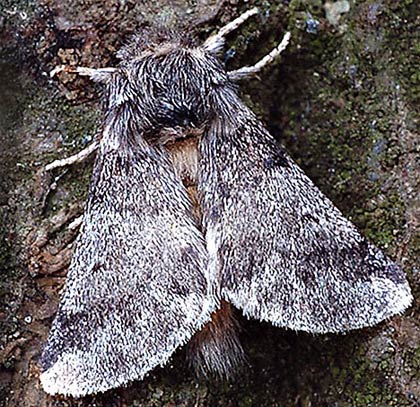
Oak processionary moth adult moth.
Adult moths have a wingspan of around 30-32mm and grey forewings suffused with white and some darker grey markings. This coloration provides an effective camouflage against the bark of oak trees on which the adults often rest.
Symptoms
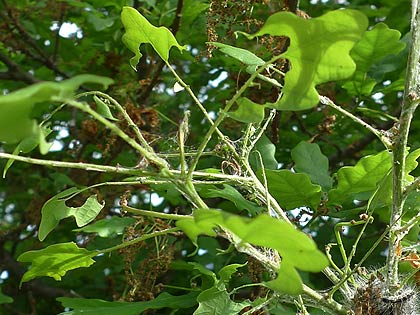
Any type of defoliating insect can have a serious impact on tree health, and OPM is no exception.
Large populations of OPM caterpillars can completely strip the leaves from a tree. Loss of leaves is unsightly and also reduces photosynthesis, thereby reducing the energy a tree has to grow. In a weakened state, the tree will be more susceptible to other pests, disease, and environmental conditions.
Control
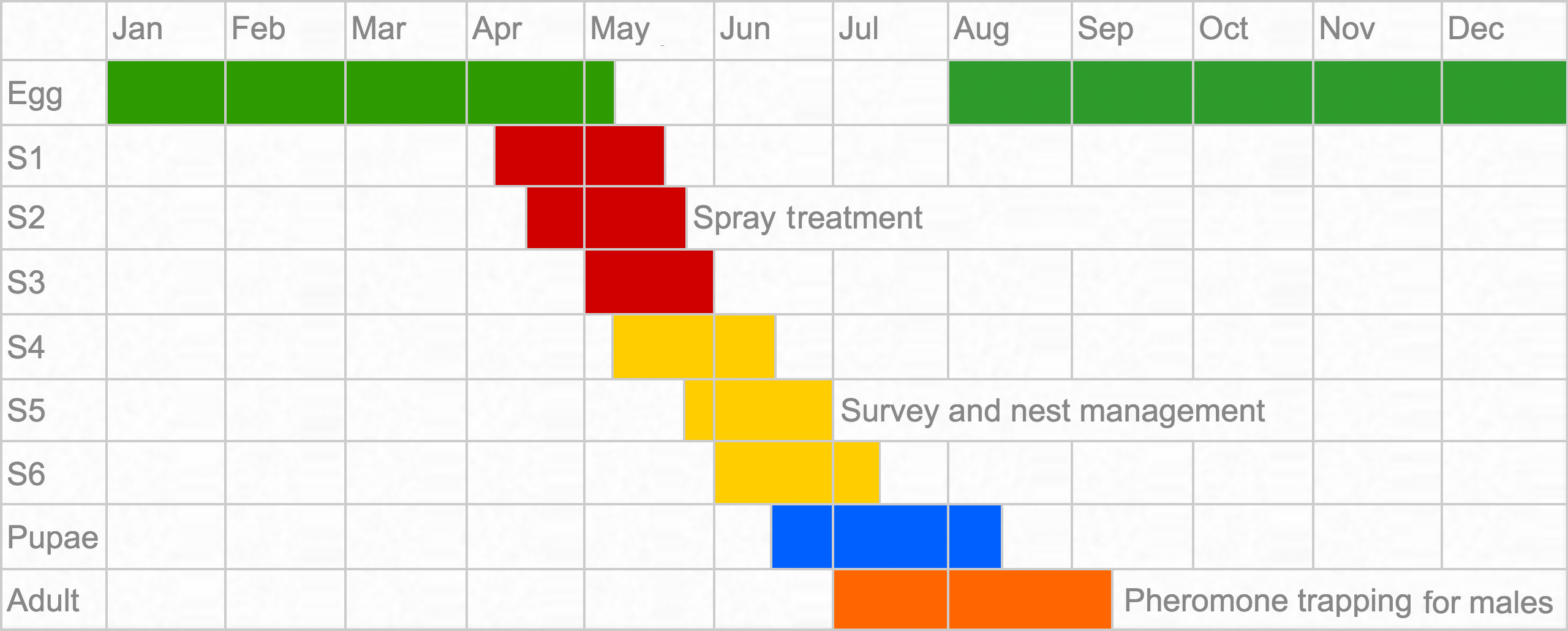
S = Life cycle stage. Timing can be heavily influenced by prevailing climatic conditions. The table provides an estimation and should be used only as a guide.
Before treating OPM, the first step is to look for infestations and confirm the presence of caterpillars. If found, there are a variety of treatments available for affected trees, including:
Biological control: Biological control is a method of keeping pests below damaging levels using natural enemies (such as Bacillus thuringiensis) and usually involves an active human role in the process.
Insect growth regulator: A method that disrupts the development of insects, preventing them from reaching maturity.
Synthetic insecticides: Chemical treatments that target specific stages of the pest's lifecycle.
Removal of OPM caterpillars or larval nests is another method to control the spread of this pest. Caution must be taken when coming in contact as there are many risks to human health.
Next is a table that shows the recommended treatment options for the life-cycle stages of development of the oak processionary moth. The table sets out the life cycle of OPM. Note that the timings of the various stages are approximate, reflecting seasonal and local variation. In some years, S1 may appear in mid-April and S4 by the first week of May.