

Diplodia Tip Blight
Pines are most susceptible
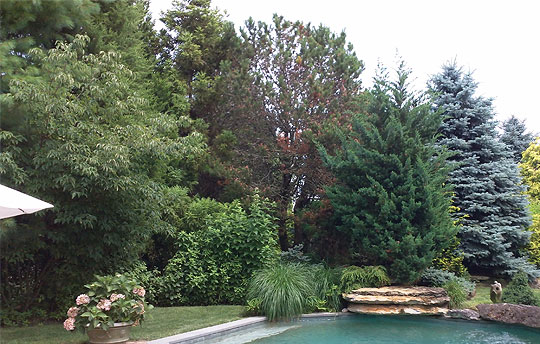
Pine in center infected with diplodia tip blight.
Diplodia tip blight is a disease caused by the fungus Diplodia sapinea that affects conifers and is especially harmful to pines. The pathogen targets new emerging growth, leading to browning and die-back at branch tips. Loss of lower branches, and even full tree decline, may occur depending on the tree species and the severity of the infection.
In much of North America, it is common to find diplodia tip blight on Austrian, ponderosa, mugo, red, and Scots pines. Most other pines and spruces are also susceptible to some degree, along with a selection of cedars, firs and other conifers.
Symptoms
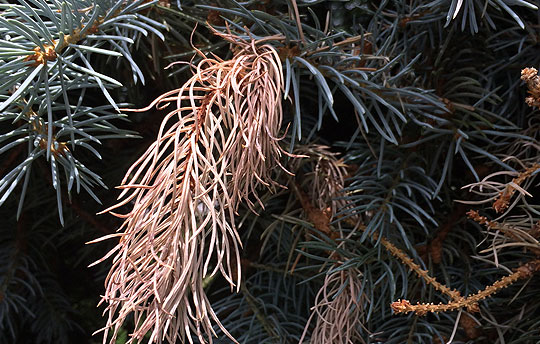
Dead new growth on spruce.
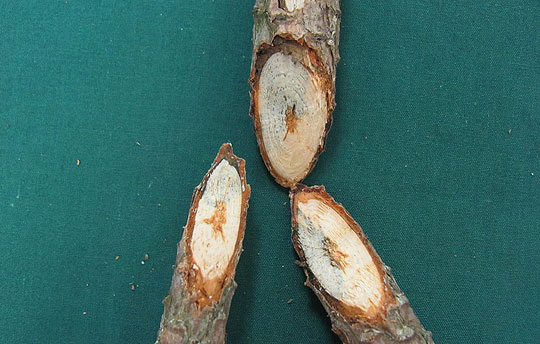
Staining of woody tissue.
Easily visible damage from diplodia tip blight typically begins to appear in the spring with the death of new growth at branch tips. The young needles turn yellow and then brown. In late summer, small black dots appear on dead needles and some cones – these are the fruiting structures of the fungus. Depending on the severity of the disease, other symptoms may include cankers/lesions on branches, dead branches, and staining of woody tissue that can be seen by cutting into an infected stem.
Control
Since diplodia tip blight is primarily an issue for stressed trees, keeping conifers healthy is the best way to avoid problems with the disease. Proper irrigation and mulching, as well as fertilization to address nutrient deficiencies, all help to maintain tree vigor. To improve appearance, and to minimize reinfection from the fruiting bodies on dead needles, trees should be pruned in periods of dry weather to remove any brown growth. Diplodia tip blight does respond to fungicide treatments, which should start at bud break in the spring for effective control. If these treatments aren't used, then cones should also be removed during pruning because they hold many fungal spores.