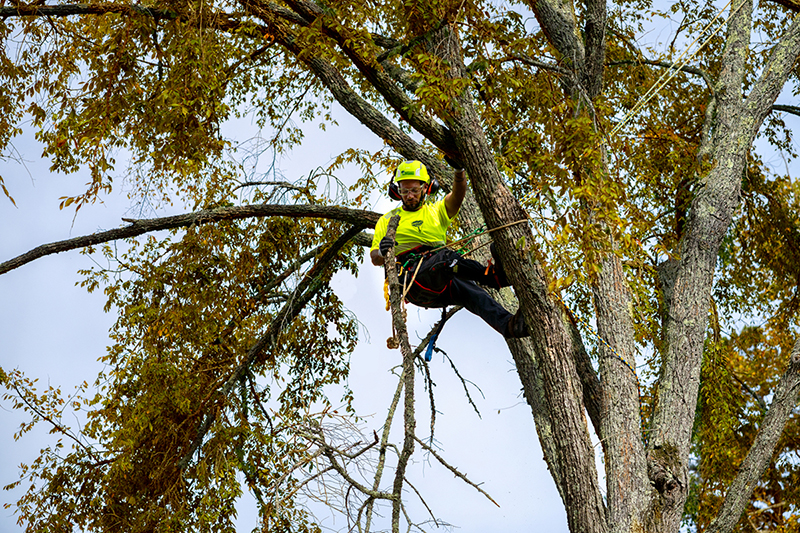

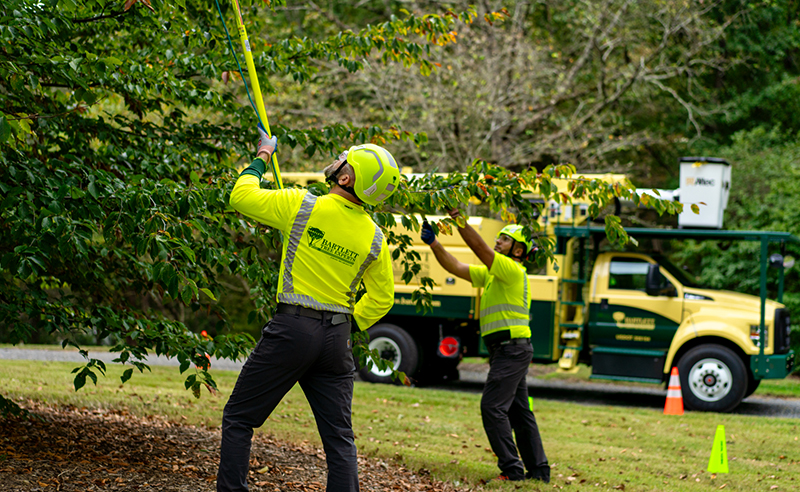
There are a number of reasons for tree pruning; some are safety related, some are to lessen interference with your house, and some protect the health of the tree. Fall is a great time to prune trees because it is one of the best times to identify problem areas in the tree. Stressed foliage often changes color earlier than foliage in the rest of the tree. Arborists can easily see the color change and diagnose the cause. If a branch is diseased or damaged, it may be best to prune it.
Winter storms, snow, and ice will all add load to dead and broken branches in a tree. This will result in more of these branches falling during the winter. Dead and broken branch removal is one of the most common ways to prevent damage to houses or other objects beneath a tree.
Branches grow during the spring and summer. Some may grow too close to your roof or siding, or they may grow too low over your sidewalk, driveway or lawn. Winter storms will certainly blow these branches around; we don’t want them to injure you or to damage your house. Therefore, interfering branches should be removed, thinned, or reduced in length to lessen the problem.
In some areas, there are causal agents of disease spread by insects that are attracted to fresh pruning cuts. These insects are no longer flying in the late fall and winter, so this is the best time to prune species such as oak and elm.
At Bartlett, we like to examine the tree and consult with you to determine your needs and goals. Then we apply our knowledge of tree structure, tree health, and pest problems to develop a pruning plan that will protect your property and improve the health and longevity of your trees.