


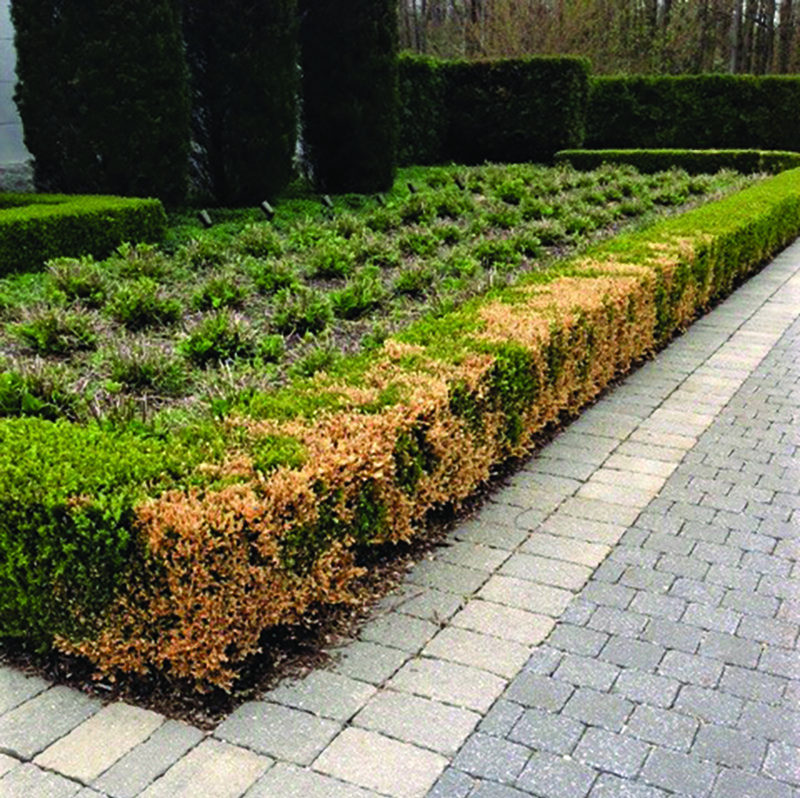
Winter can be a tough time for plants, especially for species unadapted to the environmental conditions they are exposed to. Sustained and extreme low temperatures, snowfall, and ice storms can all result in a variety of different types of plant damage, including plant tissue death from freezing, desiccation of plant tissue (“winter drying”), stem splitting (“frost cracks”), limb breakage from snow and ice accumulation, de-icing salt injury, and browsing injury caused by deer or rodents.
Evidence of winter injury may not be readily visible until the growing season resumes, so now is a good time for a Bartlett Arborist Representative to carefully review your property. Susceptible plants and those in exposed locations should be examined for damage in early spring and monitored through leaf expansion. Continued monitoring of injured plants is important given that stressed plants are typically more prone to secondary insect and disease attack. Frost cracks should be watched for new growth that closes the wound. Many trees and shrubs with brown foliage now may sprout new growth on injured limbs as the weather warms, so consider waiting to prune until their condition can be more fully evaluated.
If salt is a problem, either by runoff or from piled snow, ask your Bartlett Arborist Representative about salt recovery programs. He or she can test the soil to measure salt levels and apply treatments if necessary. If deer or rodents are active in your area, preventive/deterrent treatments can be applied to eliminate or minimize browsing damage.