


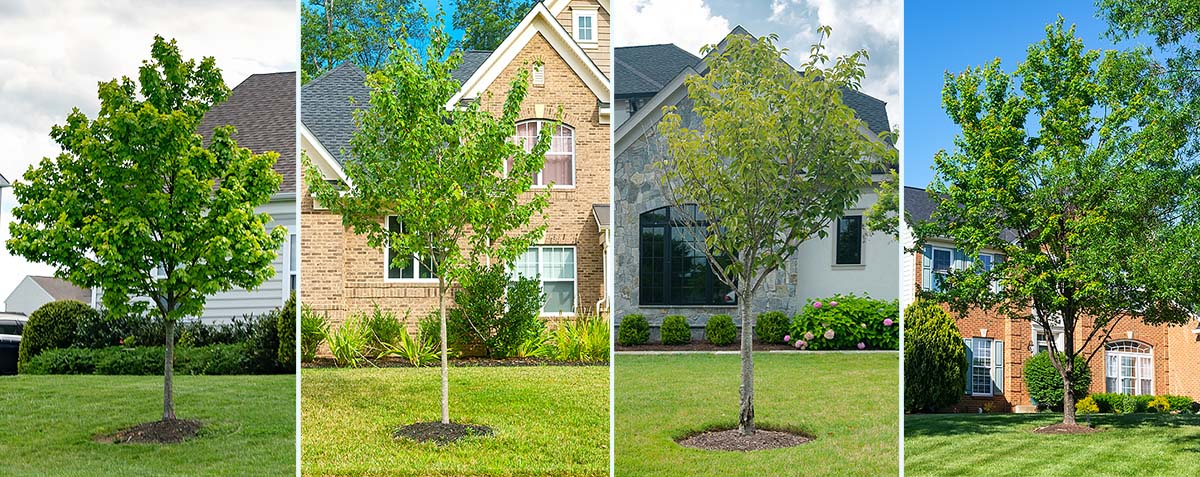
Once established, young trees exhibit rapid growth because they produce abundant foliage relative to their size, generating surplus energy for root and branch development and storage. The value and long term stability of a tree increase as it matures; therefore, plant health care programs can be designed to maximize growth and strong structural development through proper pruning, fertilization, root care, irrigation, and integrated pest management.
Pruning young trees is a multistep process aimed at developing strong structure, improving appearance, and preventing future interference with people, structures, and utilities. Because leaves are the source of energy, excessive pruning should be avoided; however, a benefit to pruning young trees is that pruning wounds will be small and seal rapidly. For most tree species, pruning every 1 to 2 years is recommended.
A strong, dominant central stem should be selected and maintained, with co-dominant stems removed early to prevent weak unions. Major branches should be well spaced with appropriate form for the species, and over-extended branches reduced to maintain strong attachments. Branches that are dead, diseased, or crossing should be removed early , as should root suckers.
Fertilizing young trees produces rapid responses. When accelerated growth is desired, routine applications of high nitrogen, slow release fertilizers are recommended. Soil pH should remain within the species’ optimal range, and nutrient deficiencies should be corrected on the basis of soil analysis.
Root system care begins by ensuring the root collar remains above the soil line. Buried collars retain excess moisture, damage stem tissue, and increase insect and disease susceptibility. Problems should be corrected early, using air tools or hand tools to excavate.
Maintaining a 2 - to 4-inch layer of organic mulch promotes root development by reducing turf competition, conserving moisture, moderating temperature, improving soil microbiology, and protecting the stem from mechanical injury.
Young trees require approximately 1 inch of water per week during the growing season, especially when fertilized. Irrigation should be monitored to avoid soil saturation—moisture meters can assist. Finally, IPM (integrated pest management ) techniques should be used to detect and manage pests before they severely impact tree health.