


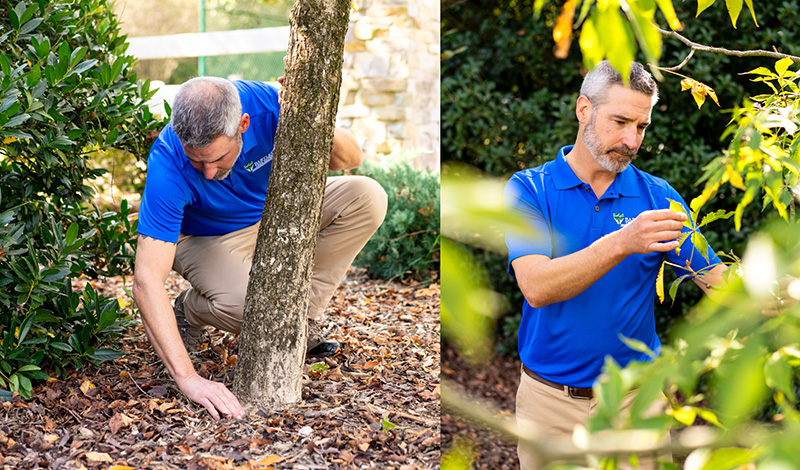
As the seasonal extremes of summer weather approach, it is wise to monitor the plants in your landscape for signs of stress, as well as signs of pest or disease outbreak. In particular, populations of mites, scale insects, and other sap-feeding pests may be present.
The evidence of diseases that begin in spring can also be assessed. Some common indicators and signs to monitor for in your landscape are the following:
- →Wilting, discoloration, spots, or bumps on leaves
- →Branch dieback, or buds that failed to leaf-out
- →Decay fungi on trunk or root flare
- →Stained areas or oozing liquid on the trunk or roots
- →Presence of defoliating insects
- →Sap-sucking insects secreting honeydew that leads to sooty mold growth
- →Sawdust-like debris caused by wood-boring insects
- →Premature autumn color and leaf drop
Whereas some signs may indicate problems that cause negligible damage and require little to no intervention, others can reveal that a serious problem exists or could develop if the signs are ignored. Correctly diagnosing the cause of these features is the first step in providing appropriate plant health care recommendations. A certified arborist can help with this by knowing what to look for according to the tree species being examined, taking samples for accurate diagnosis, and prescribing appropriate management to keep your trees healthy. Please contact your local Bartlett Arborist Representative to schedule a complimentary consultation.